
Rebuilding Function and Confidence After Tooth Loss
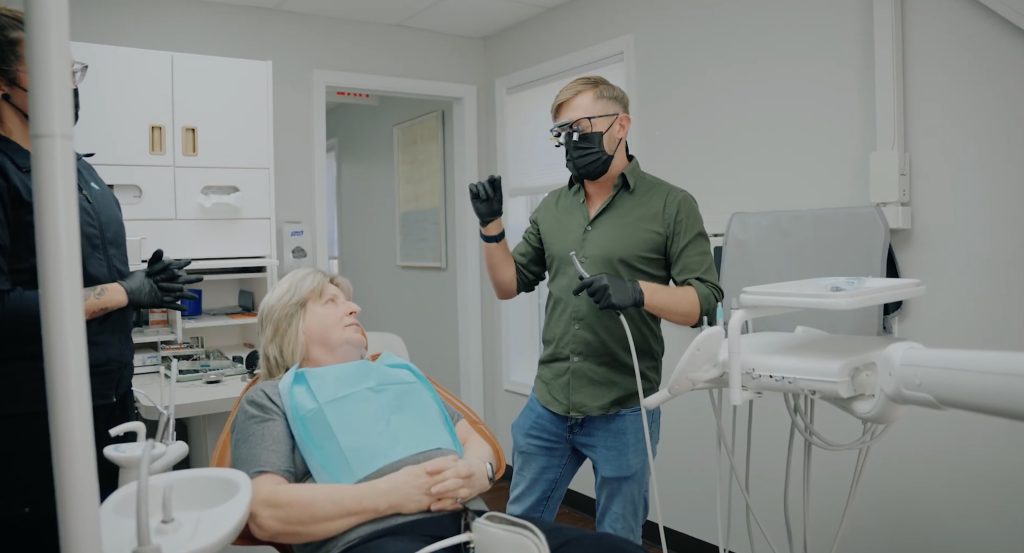
After dealing with a toothache, she underwent significant dental work that resulted in the removal of multiple teeth.
“I went in for a toothache and ended up having 12 teeth pulled,” she recalled.
The dentures she received afterward did not fit well, and over time, her ability to eat and speak comfortably became more limited.
Beyond function, there was also an emotional component.
She had always been a sociable and confident person, but without a stable smile, that confidence was harder to maintain.
She joined online groups, read about different procedures, and spoke with others who had gone through similar experiences.
By the time she came to Tuscarora Dental, she had a clear understanding of what she was looking for:
“The thing I was most nervous about was the dentist itself,” she said. “My anxiety goes through the roof.”
Even making the initial phone call was difficult.
This is something we take seriously, as many patients seeking this type of treatment have had prior experiences that make dental care stressful.
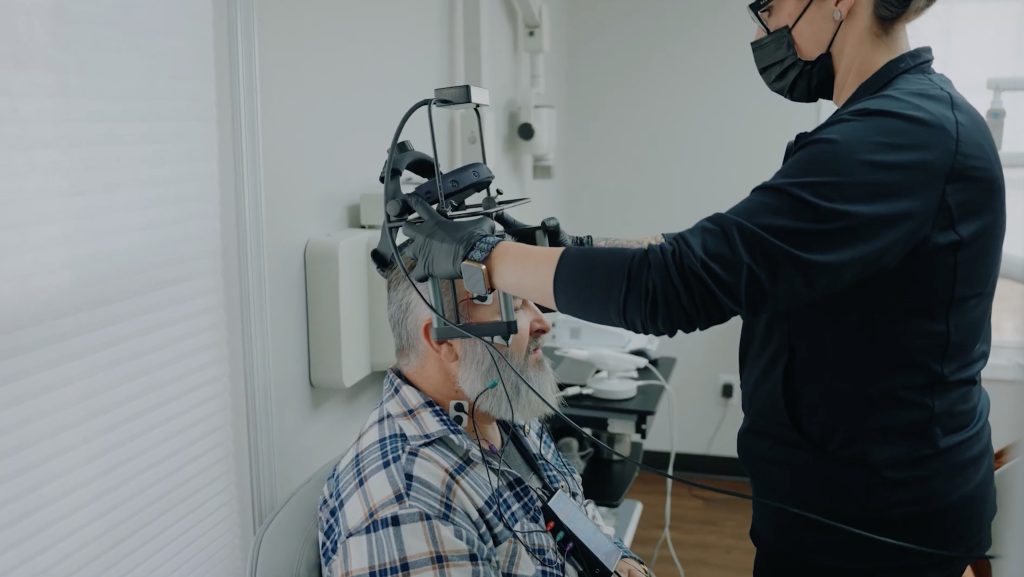
The planning process was entirely digital and included:
The goal was to create a result that was both functional and consistent with her natural facial features.
As is sometimes the case, a temporary removable denture was used during the healing period to allow the implants to integrate properly with the bone.
While this phase can be challenging, it plays an important role in ensuring long-term success.
This allowed her to:
Once everything was stable, the final restoration was completed.
“I went in as a nervous wreck and left smiling every time,” she said.
She described feeling supported throughout the process, with a level of attention that helped reduce her anxiety over time.
“My new smile is 100% better than what it was,” she shared.
She is now able to:
One of the moments that stood out most to her was something simple.
Her first meal after treatment included foods she hadn’t been able to eat in a long time.
“I hadn’t had nachos or steak in two years,” she said.
“I didn’t recognize myself at first,” she said. “I had to learn how to smile again.”
That adjustment period is normal, especially after a long time without a stable smile.
This type of treatment allows us to restore:
In a way that is predictable and tailored to the individual.
There are solutions available that can significantly improve both function and comfort.
Taking the first step is often the hardest part, but it is also the most important.
Our Latest Patient Stories
- A solution that felt stable
- A result that looked natural
- And something that would allow her to return to normal function
- CBCT imaging to assess bone structure and plan implant placement
- 3D scanning for accurate modeling
- Facial photography to guide smile design
- Collaboration with a dental laboratory for a customized outcome
- Adjust to the new teeth
- Confirm comfort and function
- Provide feedback before the final prosthesis was created
- Eat comfortably, including foods she had avoided for years
- Speak and interact without hesitation
- Smile openly and confidently
- Function
- Aesthetics
- And quality of life
- Missing teeth
- Ill-fitting dentures
- Difficulty eating or speaking
A Long Road to a Decision
Terri’s journey to treatment began with a series of challenges that many patients face.
Doing the Research
Before moving forward with treatment, Terri spent over a year researching her options.
Overcoming Anxiety
Despite her preparation, one of the biggest barriers was anxiety.
Establishing the Plan
Terri’s case required a full-arch solution using implant-supported prosthetics.
The Surgical and Healing Phases
Implant placement was completed according to a detailed surgical plan.
Transitioning to a Fixed Solution
After the healing phase, Terri transitioned to a fixed provisional restoration.
The Experience Along the Way
What stood out most to Terri was not just the clinical outcome, but the experience itself.
Life After Treatment
The changes following treatment were significant.
Adjusting to Change
Seeing her new smile for the first time was emotional.
What This Case Represents
Advancements in digital planning and implant technology have made it possible to achieve outcomes today that were not feasible in the past.
For Patients Considering Treatment
If you are dealing with: